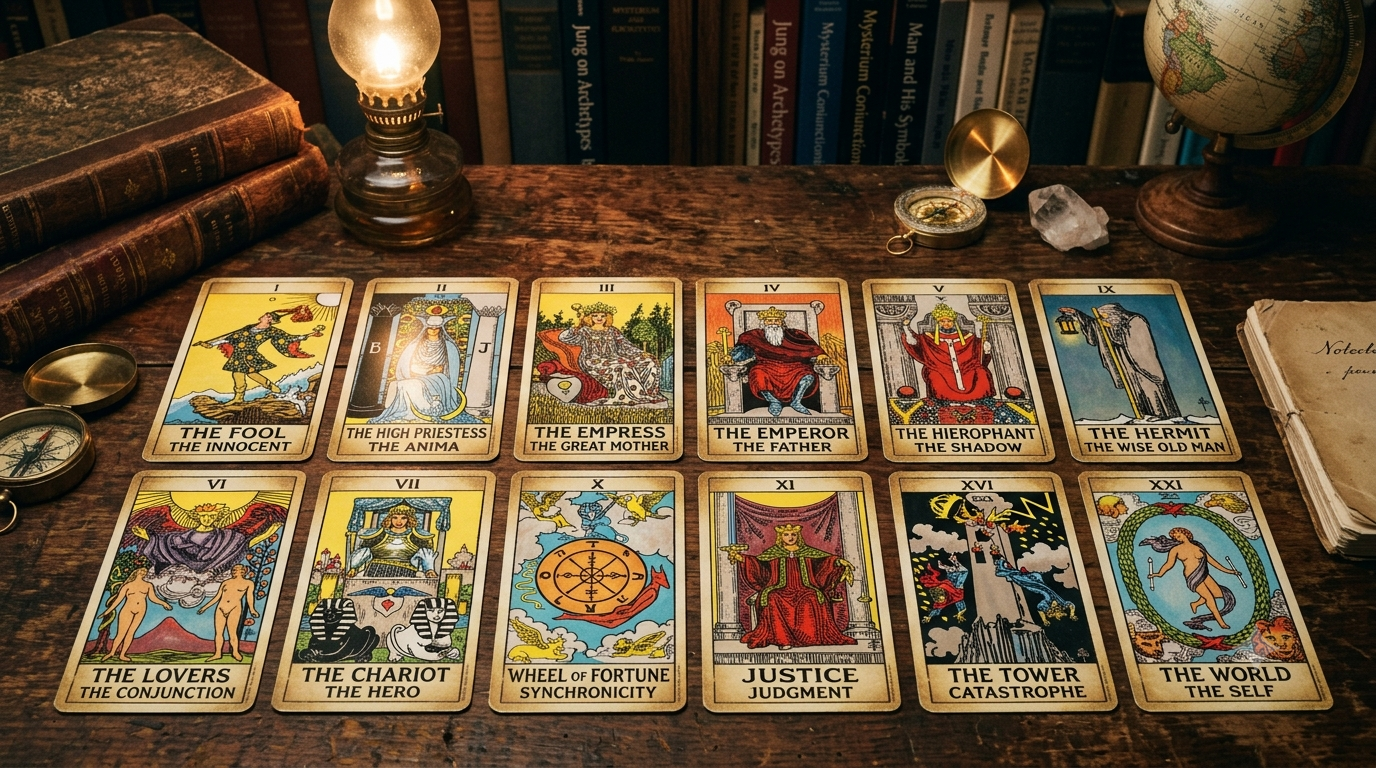
How to Read Tarot for Yourself Without Bias or Overthinking
Tarot is one of the most powerful tools for self-reflection, personal insight, and spiritual growth. Yet reading for yourself can often be the greatest challenge. When the cards concern your own life, hopes, fears, and expectations naturally arise, making it easy to interpret the messages according to what you want—or dread—to hear.
Instead of receiving genuine guidance, the reading can become a reflection of wishful thinking or anxious speculation.
The good news is that self-reading becomes much clearer with the right mindset. By approaching the cards with calm awareness rather than emotional attachment, you create space for authentic insight to emerge. The Hermetic tradition offers valuable wisdom for cultivating this state of inner neutrality.
The Hermetic Perspective on Divination and Bias
The ancient Hermetic teachings describe the universe through universal principles that apply not only to the external world but also to the inner workings of the mind. Several of these principles speak directly to the challenges of reading Tarot objectively.
The Principle of Mentalism teaches that “The All is Mind.” Our perceptions shape our experience, and a mind clouded by attachment, fear, or expectation will inevitably distort what it perceives. If we approach the cards seeking validation rather than truth, we are more likely to project our own desires onto them.
The Principles of Polarity and Rhythm explain how the mind naturally swings between optimism and pessimism, hope and fear. Hermetic philosophy teaches that mastery is not achieved by eliminating these swings, but by observing them without becoming controlled by them.
This is where the practice of Mental Transmutation becomes essential. Rather than allowing emotions to dictate interpretation, we consciously shift our state from emotional attachment to calm receptivity.
From this perspective, reading Tarot is more than a divinatory practice—it becomes an exercise in self-mastery. The cards reflect the deeper patterns of the unconscious and the greater Universal Mind most clearly when the reader quiets the ego and becomes an impartial observer.
Many Hermetic and esoteric schools, including the Golden Dawn, emphasized meditation, ritual preparation, and mental discipline before divination precisely because these practices reduce personal bias and allow clearer perception.
1. Prepare Your Mind Before You Shuffle
Every meaningful Tarot reading begins long before the first card is drawn.
Avoid reading while overwhelmed by anger, fear, grief, or excitement. Strong emotions are not inherently negative, but they can dominate interpretation.
Instead, spend a few minutes preparing yourself.
- Practice slow breathing or meditation to calm the mind.
- Ground yourself by becoming aware of your body and your surroundings.
- Cleanse your deck or reading space if this is part of your spiritual practice.
- Set a clear intention such as:
“May this reading provide objective guidance for my highest good.”
An especially powerful exercise is to openly acknowledge your expectations before shuffling.
Write down or say aloud:
- What do I hope the cards will say?
- What am I afraid they might reveal?
Simply recognizing these attachments often weakens their influence.
Finally, remind yourself:
“I am not my hopes or fears. I am the observer.”
This shift into the witnessing mind creates the receptive state that Hermetic philosophy considers essential for truthful divination.

2. Ask Questions That Invite Wisdom
The quality of a Tarot reading is largely determined by the quality of the question.
Questions seeking certainty often encourage biased interpretations because we unconsciously search the cards for confirmation.
Instead of asking:
- Will they text me back?
Ask:
- What do I need to understand about this relationship right now?
Instead of:
- Is this the right decision?
Ask:
- What opportunities, challenges, and lessons should I understand before making this choice?
Questions that seek guidance rather than prediction invite deeper insight and align with the Hermetic emphasis on wisdom instead of control.
3. Read the Symbols Before the Story
Once you’ve drawn the cards, resist the urge to immediately weave them into a narrative.
Instead, pause.
Look carefully at each image.
Notice:
- Which symbols immediately stand out?
- Which emotions arise naturally?
- What was your first intuitive impression?
These initial observations often emerge before the analytical mind begins constructing elaborate stories.
Only afterward should you explore the traditional meanings of the cards and how they interact within the spread.
Journaling is especially valuable at this stage. Write down multiple possible interpretations without deciding which one is “correct.”
If your interpretation feels suspiciously comforting—or unusually frightening—consider pulling a clarifying card while asking:
“What do I need to understand about the way I am interpreting this reading?”
This simple question often reveals hidden assumptions or emotional projections.
4. Recognize the Difference Between Intuition and Overthinking
One of the greatest obstacles in self-reading is mistaking anxious thinking for intuitive guidance.
Overthinking tends to feel urgent, repetitive, and emotionally charged.
True intuition is usually much quieter.
It often arrives as a simple realization that feels clear without demanding immediate action.
When you notice yourself repeatedly reinterpreting the same cards, step away.
Record your impressions in a journal and revisit the reading a day or two later.
Time often reveals meanings that emotional involvement initially concealed.
Another helpful practice is to imagine the spread belongs to someone you deeply care about.
How would you interpret these cards if you were reading for a trusted friend?
Creating this psychological distance makes it easier to see the symbolism with greater objectivity.
Finally, resist repeatedly asking the same question in hopes of receiving a different answer.
Repeated readings on the same issue often create confusion rather than clarity.
5. Develop Trust Through Daily Practice
Objectivity is a skill that develops gradually.
Rather than performing elaborate readings only during times of crisis, consider drawing a single card each day.
Reflect on how its symbolism relates to your experiences.
Keep a journal documenting:
- The card drawn.
- Your initial interpretation.
- What actually unfolded during the day.
- Any insights that became clear afterward.
Over weeks and months, you’ll begin recognizing the unique symbolic language through which your intuition communicates.
The goal is not to predict every event but to cultivate a deeper relationship with your own inner wisdom and with the greater patterns that Tarot reflects.
Final Thoughts
Reading Tarot without bias does not require becoming emotionally detached from your life. Instead, it asks you to become honest about your attachments while remaining open to whatever wisdom the cards may reveal.
Hermetic philosophy reminds us that true mastery begins with mastery of the mind. By calming emotional extremes, asking wiser questions, and approaching each reading with humility and curiosity, the cards become more than tools of prediction—they become mirrors reflecting the deeper movements of the soul.
With consistent practice, you’ll discover that the clearest readings rarely come from forcing meaning. They emerge naturally when the mind grows still enough to listen.
Happy reading. May your cards bring you wisdom, courage, and alignment with the deeper currents of the Universal Mind.